E-Invoicing as a Starting Point for Automation
Veröffentlicht am 13.05.2026
Lesedauer: 5 min

Contents
- Why the Automation of E-Invoice Processing Often Fails
- The Key Benefits of Digital Invoices and Automated Processing
- E-Invoice Formats for Automating Your Invoice Processing
- Taking a Strategic Approach to Invoice Processing Automation
- Conclusion: Implementing Automation with E-Invoicing
- Frequently Asked Questions About Automation with E-Invoices
Inhalt
- Why the Automation of E-Invoice Processing Often Fails
- The Key Benefits of Digital Invoices and Automated Processing
- E-Invoice Formats for Automating Your Invoice Processing
- Taking a Strategic Approach to Invoice Processing Automation
- Conclusion: Implementing Automation with E-Invoicing
- Frequently Asked Questions About Automation with E-Invoices
In many companies, digital invoices are still processed manually—even though the technology for full automation has long been available and affordable. E-invoicing is far more than just a shift from paper to PDF: it forms the foundation for a fully automated invoice processing workflow, from initial receipt through verification and approval to audit-proof archiving.
But not every digitization effort is automatically a wise one. Asking the right questions before implementing a solution helps you avoid costly detours and realize the full potential. This article explains what matters strategically when automating invoice processing, which technologies and formats make a difference, and how to avoid common pitfalls from the start.
Why the Automation of E-Invoice Processing Often Fails
The decision to adopt digital invoice processing is an easy one. Yet many projects fail to deliver the expected savings. Not because the technology fails, but because the strategic foundation is missing.
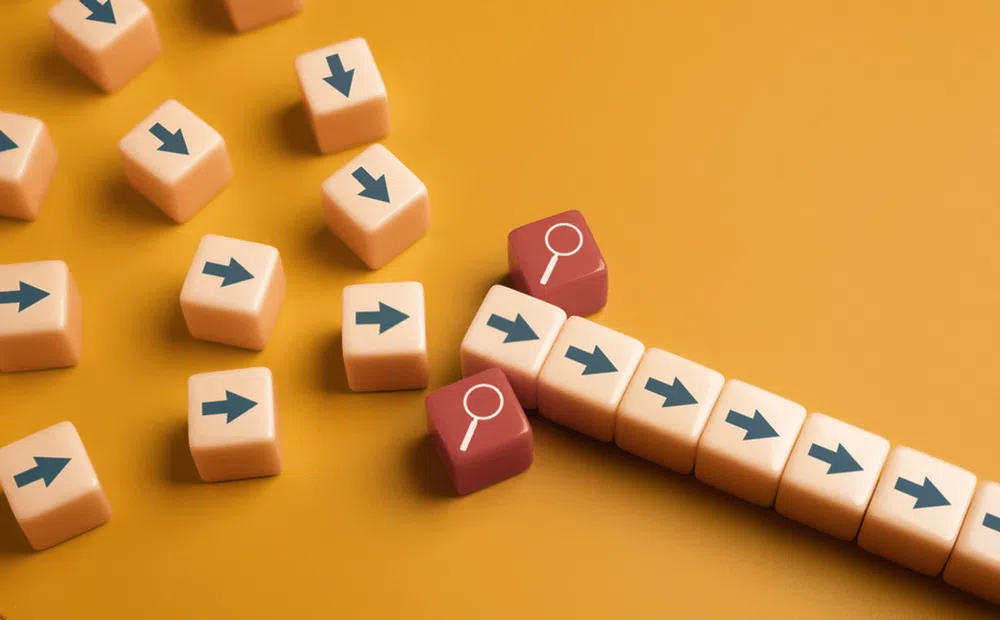
A common mistake can be explained by the Pareto Principle: 80% of incoming invoices are straightforward and can be processed quickly. They place no special demands on the system and are the part of the process that, at first glance, promises the greatest gains from automation. However, those who focus their digitization strategy on this 80% actually save only about 20% of the total effort.
The real time-consuming part is the remaining 20% of invoices: special cases, deviations from the purchase order, missing information, or inquiries to suppliers. It is precisely this part of the process that accounts for the majority of working hours and is overlooked in automation efforts focused solely on volume.
The result: The project fails to deliver the expected results, dissatisfaction spreads, and given the investment costs, the initiative is often scaled back or abandoned entirely.
So the key question is not “How can we automate as many invoices as possible?”, but rather “How can we automate the process in such a way that even the most complex cases are handled efficiently?” Answering this question at the start of a project lays the groundwork for automation that actually provides tangible relief.
E-Invoice Formats for Automating Your Invoice Processing
One of the most important decisions when automating invoice processing is choosing the right technical infrastructure. Not every format is suitable for every business situation—and this choice has long-term consequences.
Broadly speaking, there are two approaches:
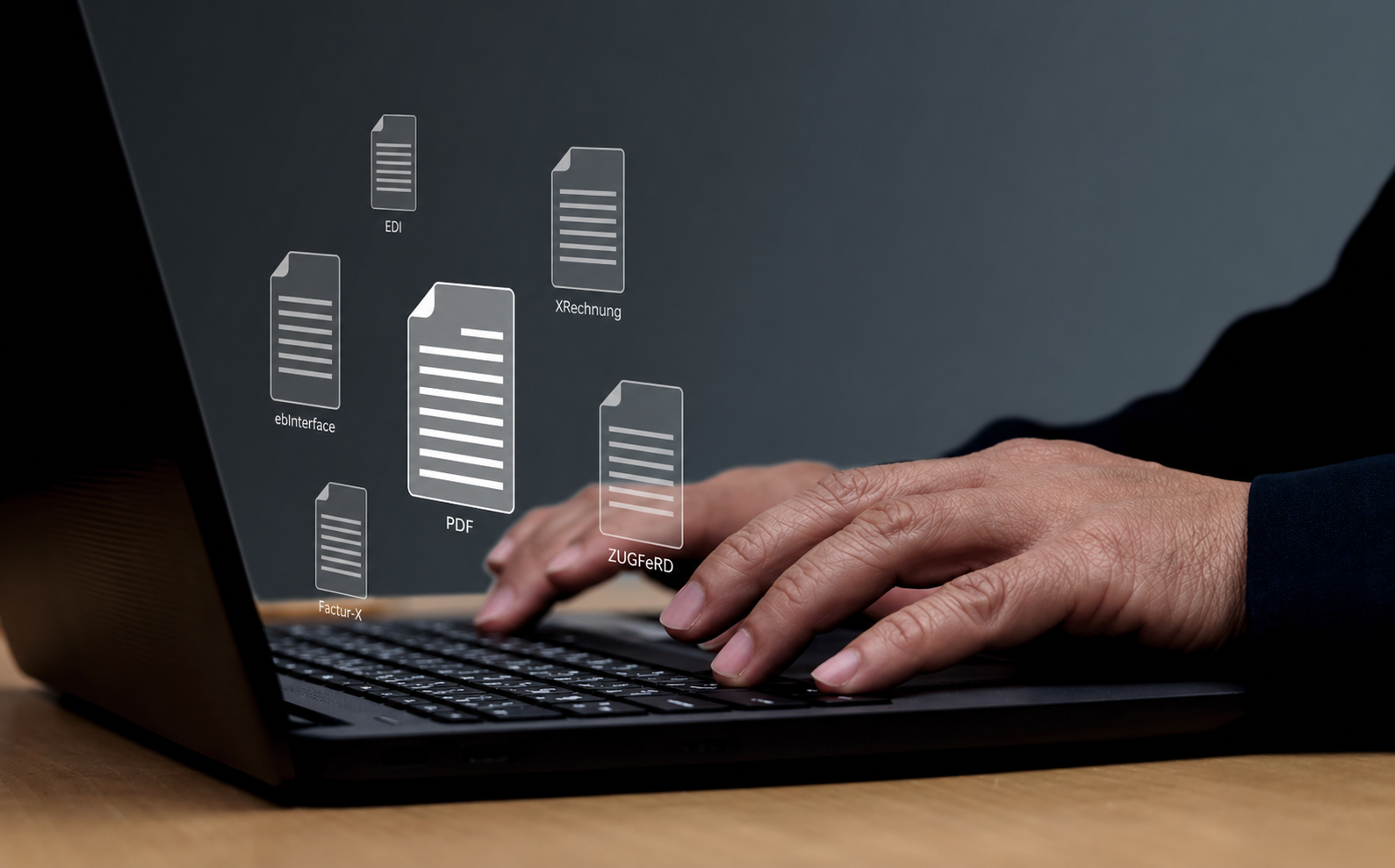
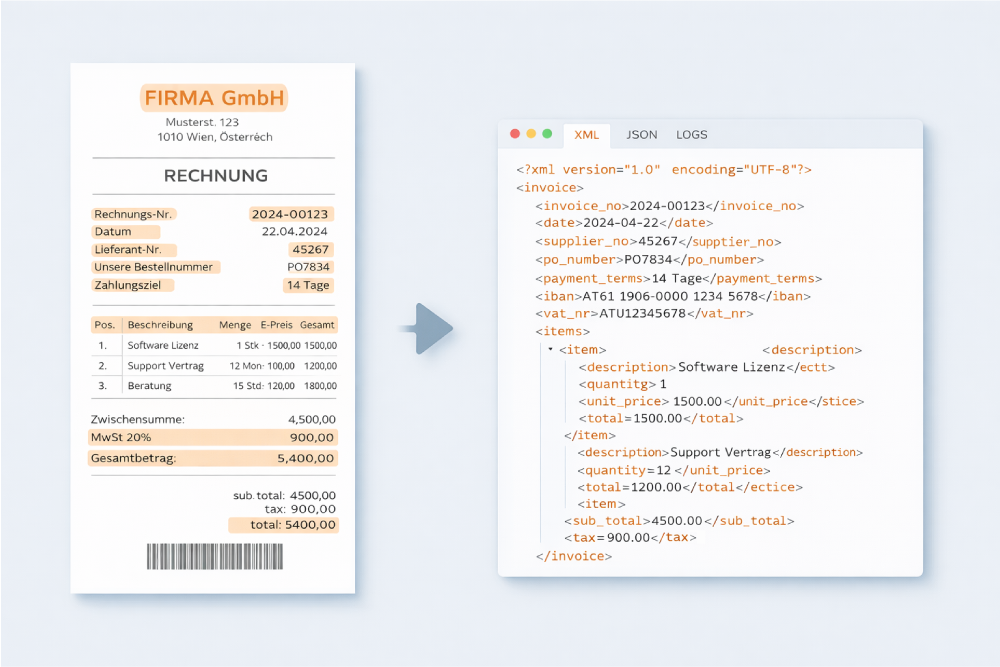
- Structured formats like XML (XRechnung) enable fully automated processing without manual intervention, but require dedicated viewer software if a person wants to read them.
- Hybrid formats like ZUGFeRD combine machine-readable and human-readable features. For many companies, these are the most practical starting point.
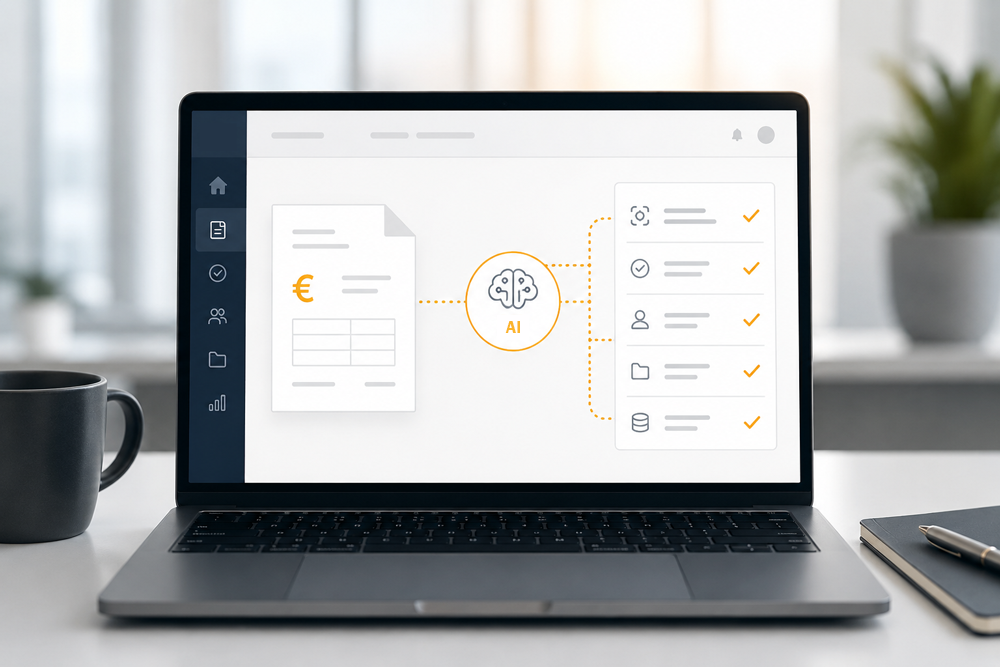
The reality in most companies, however, is mixed: Many suppliers continue to issue invoices as simple PDFs or on paper. This is where AI-powered processing comes in—as a flexible complement to structured formats. Using OCR, incoming PDFs, scans, and image files are automatically read, and all relevant invoice data is extracted.
The issue of formats is also relevant from a legal perspective: With the phased introduction of mandatory e-invoicing in Germany starting in 2025, structured formats are becoming significantly more important even for companies outside the public sector. Anyone implementing a solution today should ensure that it can process all common formats consistently.
You can find a detailed overview of all relevant e-invoicing formats for Germany and Austria in our guide to e-invoicing formats.
Taking a Strategic Approach to Invoice Processing Automation
Technology alone does not guarantee efficiency. What matters is whether the solution is tailored to the company’s actual needs and implemented with clear objectives. Three questions can help:
- What is the goal?
To automate a higher volume, reduce the effort required for complex special cases—or both? - How do we measure success?
Specific KPIs such as turnaround time, error rate, or discount utilization rate make progress measurable. - Who is involved?
IT, accounting, purchasing, and management should be involved from the start.
Our guide to digitizing incoming invoices shows what the concrete implementation looks like step by step—from digitizing incoming invoices to audit-proof archiving.
Conclusion: Implementing Automation with E-Invoicing
E-invoicing is not the goal; it is the starting point. By implementing it strategically, choosing the right formats, and incorporating even complex special cases into the automation process from the outset, you can significantly streamline invoice processing: less manual work, fewer errors, faster turnaround times, and demonstrably lower costs per document.
The key is ensuring that the technology aligns with the company’s actual needs and that the project is approached with clear goals, the right team, and a realistic implementation plan.
Do You Have Any Questions For Us?
We will be happy to consult you during a short, non-binding online appointment!