Digitalization in Companies: Opportunities, Applications, and Implementation
Veröffentlicht am 14.07.2026
Lesedauer: 6 min

Contents
- What Does Digitalization Mean in Companies?
- Why Companies Need Digitalization
- Where Can Digitalization Be Implemented in Companies?
- Digitalization in SMEs
- Important Implementation Principles: How to Drive Digitalization Successfully in Companies
- Financing: Use Funding Programs for Corporate Digitalization
- Implement Digitalization in Your Company with free-com
- Digitize Business Processes & Gain Many Benefits
- Frequently Asked Questions About Digitalization in Companies
Inhalt
- What Does Digitalization Mean in Companies?
- Why Companies Need Digitalization
- Where Can Digitalization Be Implemented in Companies?
- Digitalization in SMEs
- Important Implementation Principles: How to Drive Digitalization Successfully in Companies
- Financing: Use Funding Programs for Corporate Digitalization
- Implement Digitalization in Your Company with free-com
- Digitize Business Processes & Gain Many Benefits
- Frequently Asked Questions About Digitalization in Companies
Digitalization has become a strategic prerequisite for competitive companies. Whether SME or international corporation: companies that still handle processes entirely on paper or in rigid, manual workflows lose time, money and market share. This article explains what corporate digitalization actually means, what benefits it brings, where it can be applied and how it can be implemented successfully.
What Does Digitalization Mean in Companies?
The term “digitalization in companies” describes the systematic transfer of analog processes, documents and communication channels into digital formats and systems. This ranges from the paperless office and automated approval workflows to fully connected production.
It is important to distinguish this from “digital transformation“: while digitalization affects individual processes or departments, digital transformation describes the fundamental cultural and strategic change of an entire company through digital technologies. Both belong together, but you do not have to start with the big transformation. The first step is often a single process that can be improved significantly.
Why Companies Need Digitalization
The decision to digitalize a company pays off on several levels. The most important benefits at a glance:
Where Can Digitalization Be Implemented in Companies?
Digitalization affects almost every area of a company. The following fields of application show where the greatest leverage lies:
Accounting, Invoice Processing and Expense Reporting
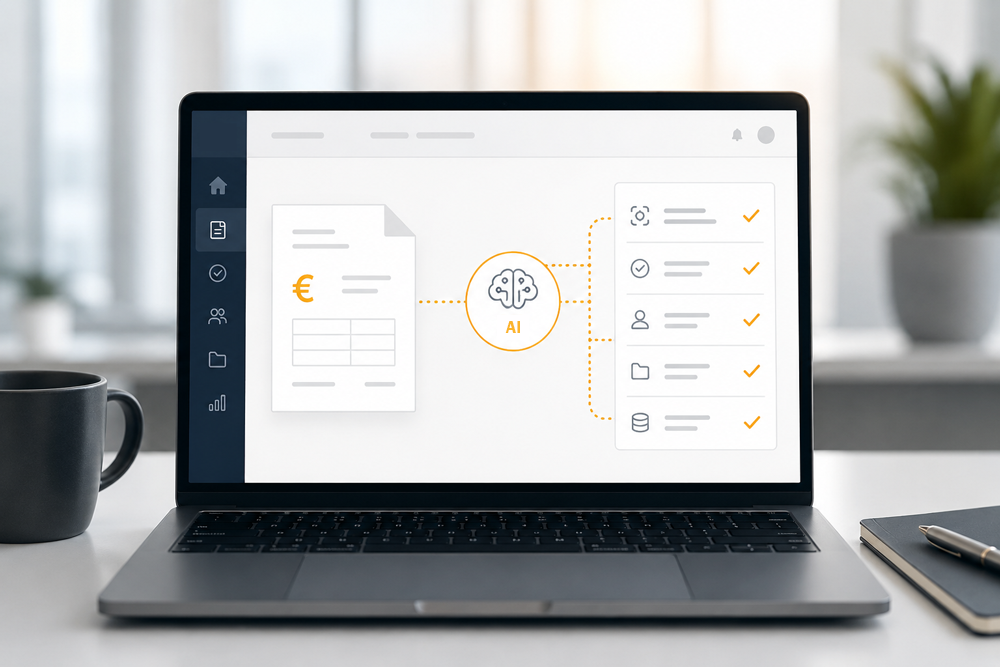
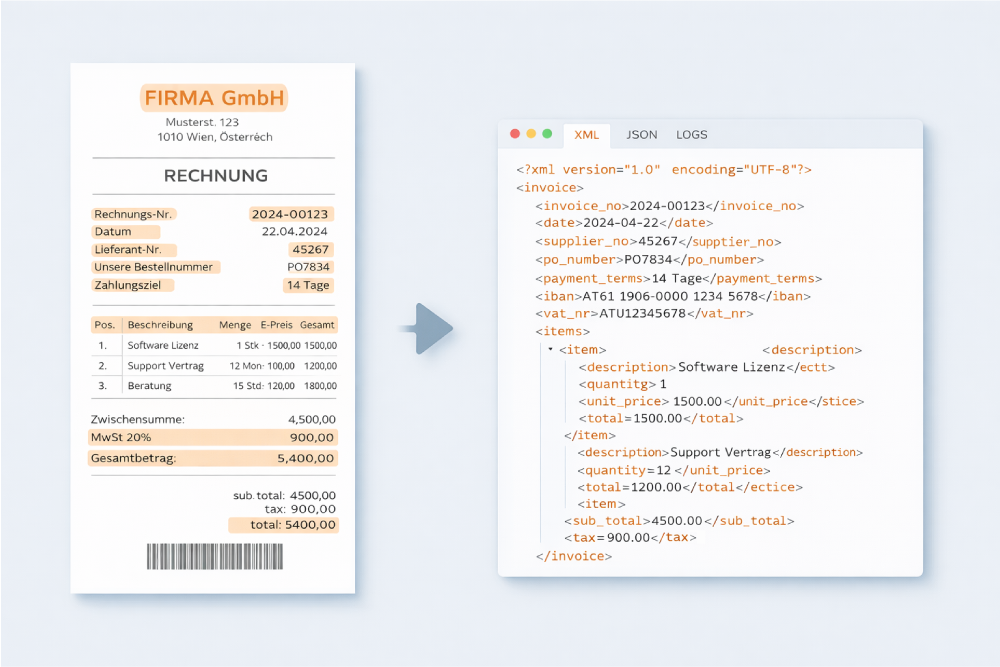
Digital invoice processing saves time and noticeably reduces errors. Incoming invoices can be automatically recognized, read and forwarded through digital approval workflows instead of being printed, stamped and sent by internal mail. The same applies to travel expense and expense reporting: receipts are photographed with a smartphone and submitted digitally.
Document Management and Archiving
Contracts, delivery notes and minutes are captured digitally, stored in a structured way and can be found at any time. Document management and ECM systems integrate seamlessly into Microsoft 365 and SharePoint and ensure audit-proof archiving that also stands up to tax audits.
Purchasing, Procurement and Order Confirmations
From purchase requisition to invoice approval: purchase-to-pay solutions connect all steps in one end-to-end workflow, transparently, traceably and without manual breaks. Digital order confirmations also create clear processes on the sales side.
Human Resources (HR)
Digital time tracking, online leave requests and structured onboarding processes replace time cards, email chains and printed checklists. New employees receive all necessary information and access rights from day one, whether they are in the office or working remotely.
Sales and Marketing
CRM systems consolidate all customer contacts and sales opportunities in one place. Automated email workflows ensure that prospects and customers receive the right information at the right time. B2B customer portals also provide a professional digital interface to business partners with practical self-service functions.
Knowledge Management
Internal wikis and central knowledge databases make process knowledge accessible to everyone instead of leaving it in individual heads. E-learning platforms enable flexible training, independent of location and working hours. This turns knowledge into a shared resource.
Digitalization in Production
Connected machines, real-time production data, predictive maintenance and digital manufacturing orders: digitalization in production increases efficiency and quality across the entire value chain and is at the heart of Industry 4.0.
Digitalization in SMEs
Small and medium-sized enterprises (SMEs) in particular face a specific challenge: the need for digitalization is well known, but resources, IT expertise and time are limited. Many shy away from the supposedly large effort and therefore wait too long.
The good news is that digitalization in SMEs does not have to start as a major project. Quite the opposite: the fastest way to success is to select a single, clearly defined process with high improvement potential. Often, this is invoice processing or expense reporting, because the benefits are immediately noticeable and implementation is comparatively straightforward.
Modern cloud solutions are an efficient and flexible approach for SMEs: scalable, standardized and usable without complex IT infrastructure. They can be expanded step by step as the company grows.
Important Implementation Principles: How to Drive Digitalization Successfully in Companies
The introduction of digital processes rarely fails because of the technology. More often, it fails because of insufficient preparation, lack of employee involvement or unrealistic expectations. These seven principles help drive digitalization in companies in a structured and successful way:
- 1Analyze the Current Situation and Identify Potential
- 2Define Strategy and Goals
- 3
Involve Employees and Take Change Management Seriously
- 4
Start Individual Pilot Projects Instead of Everything at Once
- 5
Choose Technology That Fits the Company Size
- 6
Consider Data Security and Compliance from the Start
- 7
Measure, Optimize and Scale Continuously
Financing: Use Funding Programs for Corporate Digitalization
A common argument against digitalization in companies is cost. What many do not know: both Germany and Austria offer a wide range of public funding programs that specifically support investments in digitalization.
You can find a comprehensive overview of currently available funding opportunities here:


Before making an investment decision, it is worth checking which funding options are available. In many cases, a significant share of the investment costs can be cushioned this way.
Implement Digitalization in Your Company with free-com
Companies that start digitalization measures early gain efficiency, quality, competitiveness and often also higher employee satisfaction. The key is to start small, prioritize the right processes and involve the people in the company from the very beginning.
Would you like to know what digitalization could look like in your company? Book a free software demo now and see for yourself what is possible with the right solutions.