Digitizing the Order-to-Cash Process: Efficiency from Order to Payment
Veröffentlicht am 25.08.2026
Lesedauer: 6 min

Contents
- What Does Order-to-Cash Mean?
- The Steps of the Order-to-Cash Process
- Typical Weaknesses in the Manual O2C Process
- Benefits of Digitizing the Order-to-Cash Process
- Who Benefits from Digitizing the OTC Process?
- How free-com Implements the Digitization of Your Order-to-Cash Process
- Implementing Digitization in Your Company with free-com
- Frequently Asked Questions About Digitizing the Order-to-Cash Process
Inhalt
- What Does Order-to-Cash Mean?
- The Steps of the Order-to-Cash Process
- Typical Weaknesses in the Manual O2C Process
- Benefits of Digitizing the Order-to-Cash Process
- Who Benefits from Digitizing the OTC Process?
- How free-com Implements the Digitization of Your Order-to-Cash Process
- Implementing Digitization in Your Company with free-com
- Frequently Asked Questions About Digitizing the Order-to-Cash Process
Every customer order triggers a chain of process steps: from order receipt and delivery through to payment receipt. This workflow is known as the Order-to-Cash process and is one of a company’s core business processes. Companies that digitize their Order-to-Cash process reduce manual work, accelerate workflows and create the basis for stable liquidity.
In this article, you will learn which steps the O2C process includes, where manual workflows typically fail and what digitization can look like in practice.
What Does Order-to-Cash Mean?
Order-to-Cash, or O2C or OTC for short, refers to the entire workflow from order acceptance to payment receipt. It includes all activities a company goes through after a customer has placed an order: order processing, delivery, invoicing and the final posting of incoming payment.
The Steps of the Order-to-Cash Process
The O2C process can be divided into several consecutive steps. Depending on the company and industry, these may vary, but the basic flow is similar across industries:
Typical Weaknesses in the Manual O2C Process
Many companies do not handle their Order-to-Cash process digitally, but partially or entirely manually, which has noticeable consequences. The most common problems include:
Benefits of Digitizing the Order-to-Cash Process
Digitizing the O2C process brings measurable improvements on several levels:
Who Benefits from Digitizing the OTC Process?
In principle, every company that regularly processes orders benefits from a digitized O2C process. The benefit increases with the number of orders and the complexity of the workflows.
Digitization is particularly relevant if:
- many similar orders are received every day,
- several departments are involved in the process,
- orders arrive through different channels and in different formats,
- manual errors regularly lead to complaints or reminders,
- liquidity planning is made more difficult by irregular incoming payments.
How free-com Implements the Digitization of Your Order-to-Cash Process
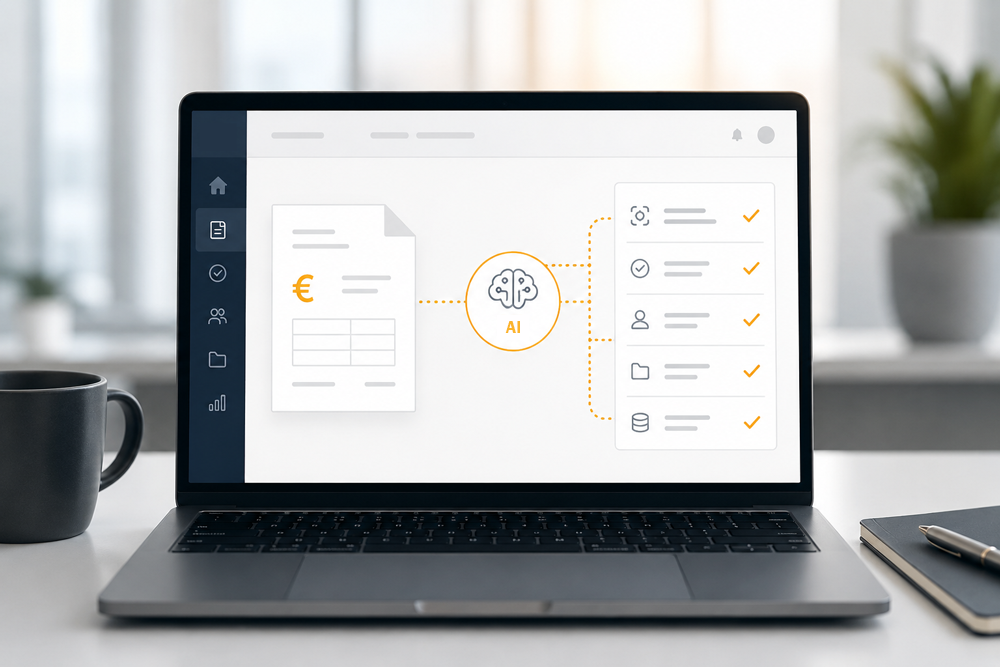
free-com supports companies in handling their Order-to-Cash process without media discontinuities and without unnecessary manual intervention. The focus is on automated workflows that capture, validate and forward incoming orders to the responsible people. Regardless of the format in which the order is received.
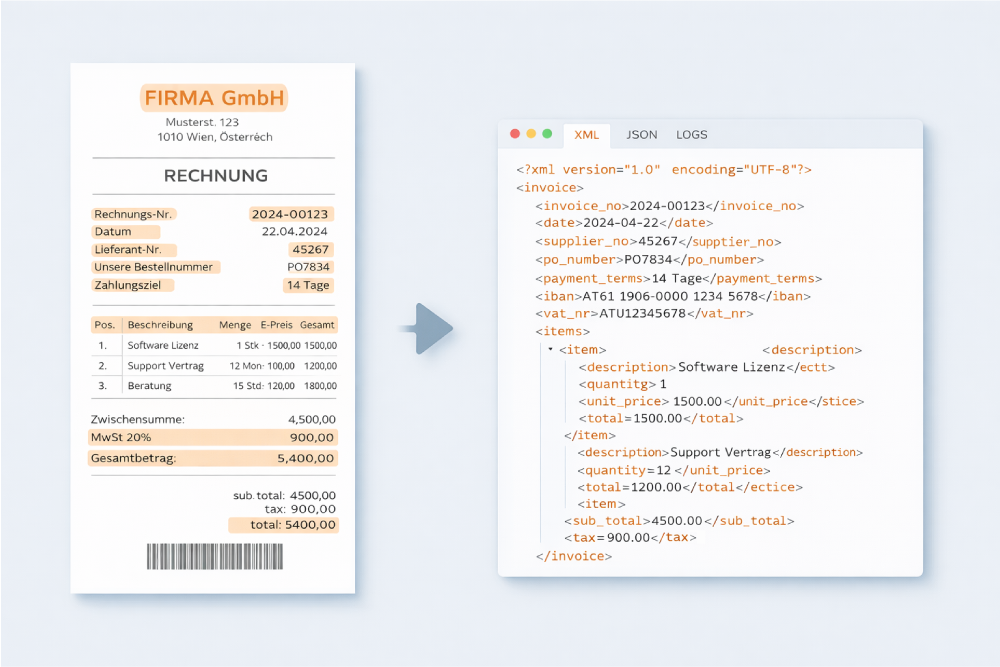
The solution extracts and classifies relevant order data without first having to be trained on specific forms or layouts. Multi-page, international or customer-specific orders with individual item descriptions, special conditions or product characteristics can also be processed reliably.
The recognized data is checked against master data, conspicuous items are flagged and, if necessary, made available for follow-up processing. Employees no longer have to check every single data record manually. Instead, they focus on deviations, special cases and specialist decisions. Exactly where human attention belongs.
Digital order confirmations, automatic document recognition and a consistent electronic workflow ensure that orders move through the process more efficiently, more transparently and with greater resistance to errors. Connected to ERP, CRM or other business systems, the digitized order data is processed in a structured way instead of getting stuck in email inboxes, PDF attachments or manual lists.
Another important building block is the digital customer file. Via the seamlessly integrated sidebar, relevant documents relating to customers, orders and transactions are available directly in the current working context. Employees can store, find or edit documents in SharePoint in line with the respective ERP or CRM context.
The sidebar can be flexibly integrated into existing business systems and ensures that access to documents remains consistent across the company. This is particularly relevant when several systems are in use and information would otherwise be distributed across ERP, CRM, email, file servers and specialist departments.
The solutions are designed for both medium-sized companies and large enterprises and can be integrated into existing ERP systems, including SAP environments. This creates an Order-to-Cash process that does not stop at data capture, but brings together order receipt, review, further processing, document access and traceability.
Implementing Digitization in Your Company with free-com
Digitizing the Order-to-Cash process is not a purely IT decision, but a strategic measure to improve efficiency, customer satisfaction and liquidity. Companies that automate the individual steps of the O2C process create the basis for scalable, low-error workflows and noticeably reduce the workload for their teams.
Would you like to know what implementation could look like in your company? Schedule a free software demo now and see our Order-to-Cash solutions for yourself.
Do You Have Any Questions For Us?
Whether delivery receipts, order confirmations, incoming invoices, expense reports or other types of documents – our intelligent solution automatically reads all company documents and enables a transparent, location-independent approval process.
We would be happy to advise you in a short, non-binding online appointment!